How to Improve Financial Literacy in Your Church: A Biblical Approach
Financial challenges in a congregation are rarely only financial.
Debt, spending pressure, lack of savings, anxiety about the future, and conflict over money can affect a person’s faith, relationships, ability to serve, and willingness to give. That is why helping people grow in financial wisdom is not merely a practical service. It is an important part of discipleship.
Financial literacy gives people the knowledge and tools to make better decisions. Biblical financial discipleship goes further. It helps people understand that everything they have belongs to God and that managing money wisely is part of following Jesus.
Here is how your church can begin helping people grow in financial wisdom, freedom, and generosity.
Begin with Biblical Stewardship
Financial literacy is not simply about teaching people to budget, save, or reduce debt. Those skills matter, but they need a deeper foundation.
Biblical stewardship begins with the understanding that God owns everything and entrusts resources to His people to manage faithfully. Money is one part of that responsibility, along with our time, abilities, relationships, and opportunities.
Jesus spoke often about money, possessions, generosity, contentment, and the condition of the human heart. He knew financial decisions reveal where we look for security and what we value most.
When churches teach financial literacy through the lens of stewardship, they help people see money as more than a source of stress or personal success. It becomes a tool for faithfulness, freedom, and Kingdom impact.
Understand the Financial Seasons in Your Congregation
No two people in your church have the same financial needs.
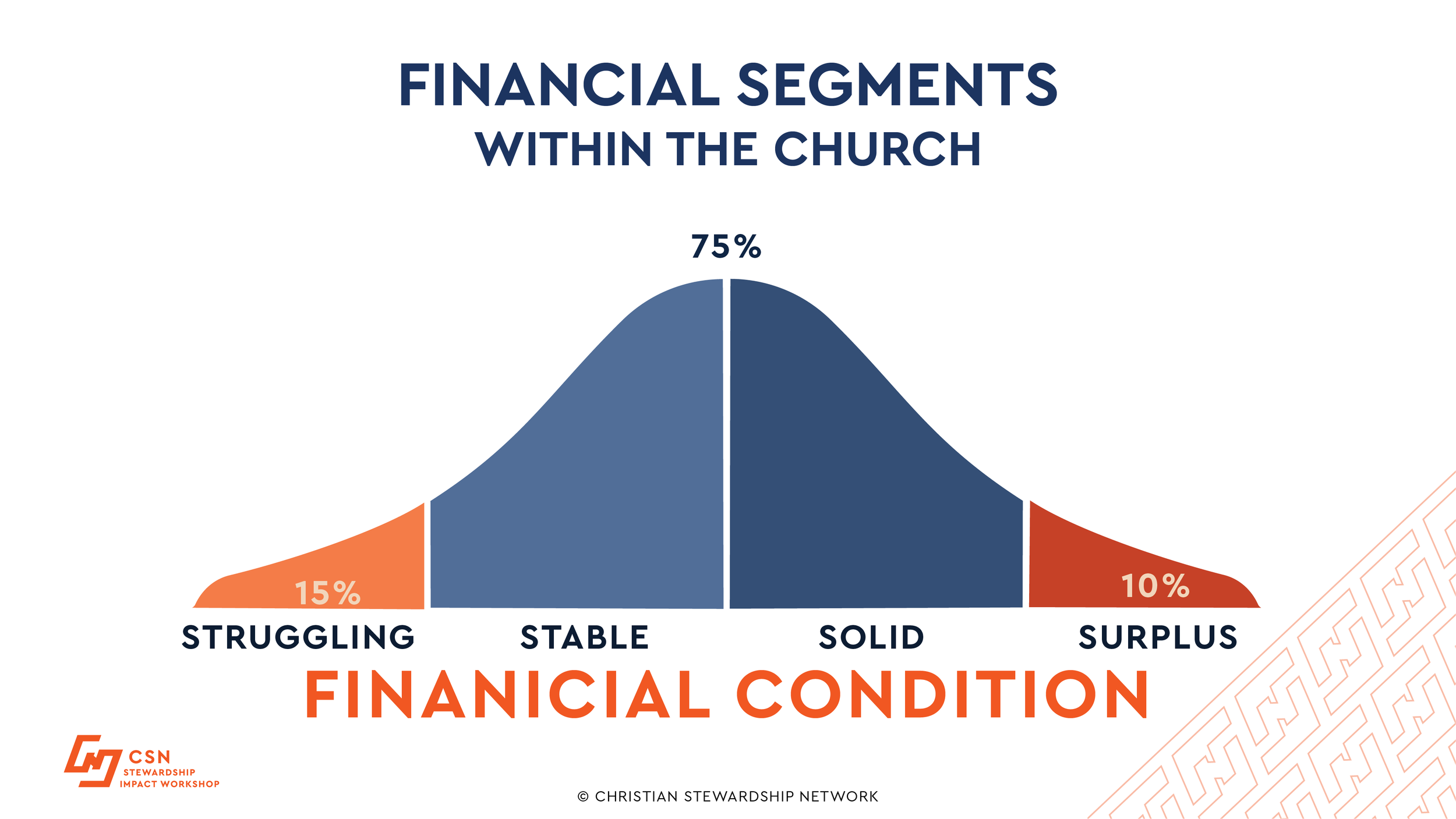
Image taken from the Stewardship Impact Workshop, online and/or in-person workshop by Christian Stewardship Network.
Some are facing immediate hardship and need help with budgeting, debt, employment, or basic stability. Others may be financially stable but want to make wiser decisions, grow in generosity, or prepare for the future. Still others have significant financial capacity and need discipleship around contentment, legacy, and Kingdom impact.
A helpful way to think about the different financial seasons in your congregation is:
Struggling: People facing financial pressure who need practical, compassionate support.
Stable: People managing their finances but looking for greater clarity and biblical direction.
Solid: People with healthy financial habits who want to grow in generosity and purpose.
Surplus: People with financial abundance who need guidance in faithful stewardship, generosity, and legacy planning.
The goal is not to label people or make assumptions about their finances. It is to recognize that one resource or message will not meet every need.
When churches offer different pathways for growth, more people can take a meaningful next step.
Offer Practical Tools Alongside Biblical Teaching
People need both truth and practical help.
A sermon on stewardship may inspire someone to make a change, but they may still need to learn how to create a spending plan, make progress on debt, build savings, communicate about money with a spouse, or give consistently.
Consider offering a mix of practical tools and learning environments:
Sermon series that connect biblical truth to everyday financial decisions
Small groups or classes focused on stewardship and money management
Budgeting, debt-reduction, or savings workshops
Financial coaching or trusted referrals for people who need individual support
Resources for marriage, parenting, retirement, investing, and legacy planning
Clear next steps for people who want to grow in generosity
Practical tools do not replace discipleship. They help people put discipleship into practice.
Make Financial Conversations Safer
Many people carry shame, fear, or anxiety around money. They may be embarrassed about debt, regret past decisions, or feel unable to talk honestly about their financial situation. A church can make an enormous difference by creating a culture where people are met with grace rather than judgment.
Help people understand that financial growth is a journey. Encourage honest conversations about challenges as well as victories. Avoid communicating about money only when the church has an immediate financial need.
When people know the church wants something for them, not simply something from them, they are more likely to receive help and take their next faithful step.
Teach Financial Wisdom in More Than One Format
Not everyone learns in the same way. Some people need a sermon that gives them a biblical framework. Others need a discussion group where they can ask questions. Some need a simple resource they can use at home, while others benefit most from one-on-one encouragement.
A healthy financial discipleship strategy includes more than one way to engage.
You might begin with one class or small group, then add workshops, mentoring, online resources, or targeted opportunities for people in particular financial seasons. The important thing is to build something sustainable instead of trying to solve every need at once.
Start with the needs you see most clearly in your congregation. Listen to people. Ask leaders where financial stress is affecting families and ministry. Then choose a practical first step.
Find the Right Resources for Your Church
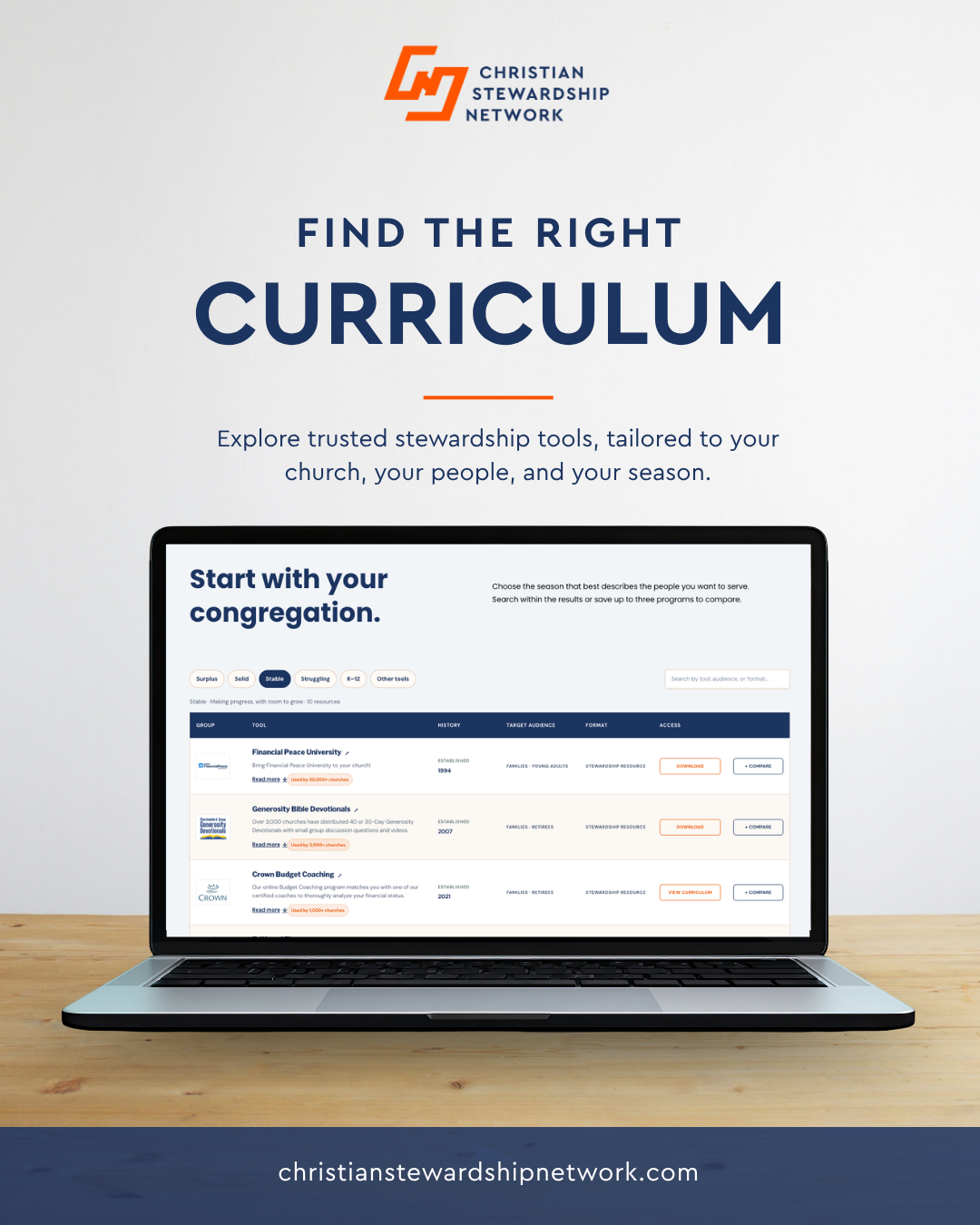
Choosing a stewardship resource can feel overwhelming. Your congregation may need help with budgeting and debt, while another group is ready for teaching on generosity, investing, or legacy planning.
The Stewardship Sandbox can help you compare stewardship curricula and resources by audience, format, financial context, and ministry focus. It gives you a clearer way to find resources that fit your church’s specific discipleship needs.
Explore the Stewardship Sandbox →
Financial Literacy Can Lead to Lasting Discipleship
Improving financial literacy is not about producing perfect budgets or solving every financial problem overnight.
It is about helping people trust God, make wiser choices, experience greater freedom, and use what they have with purpose. As people grow in financial confidence and biblical wisdom, they are better equipped to care for their families, serve others, give generously, and participate fully in the life of the church.
That is the long-term goal of financial discipleship: transformed lives, not simply better financial information.
Related Resources
Christian Stewardship Network
Keep growing in biblical stewardship.
Get practical resources, encouragement, and upcoming opportunities from CSN.